Content warning: violence, death, racism
Listening to Call Me If You Get Lost – The Estate Sale on repeat while walking often stumbling in near dark along half trails left an enduring impression which is only surfacing now through the creation of new mixed media work, blending old paintings with photos taken at that tumultuous, exciting time.
The ghosts of old work appear in the place they were made but it is a decade later. Everyone is different now. In my head the performance of saying I’m sorry is an internal monologue, made in the scenes of walking, thinking, imagining and listening.

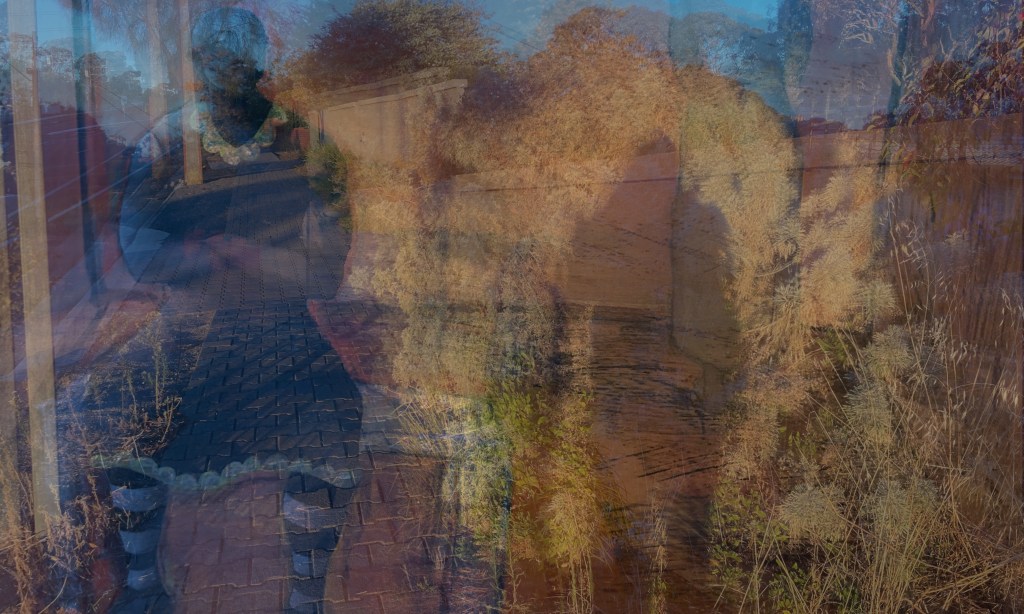
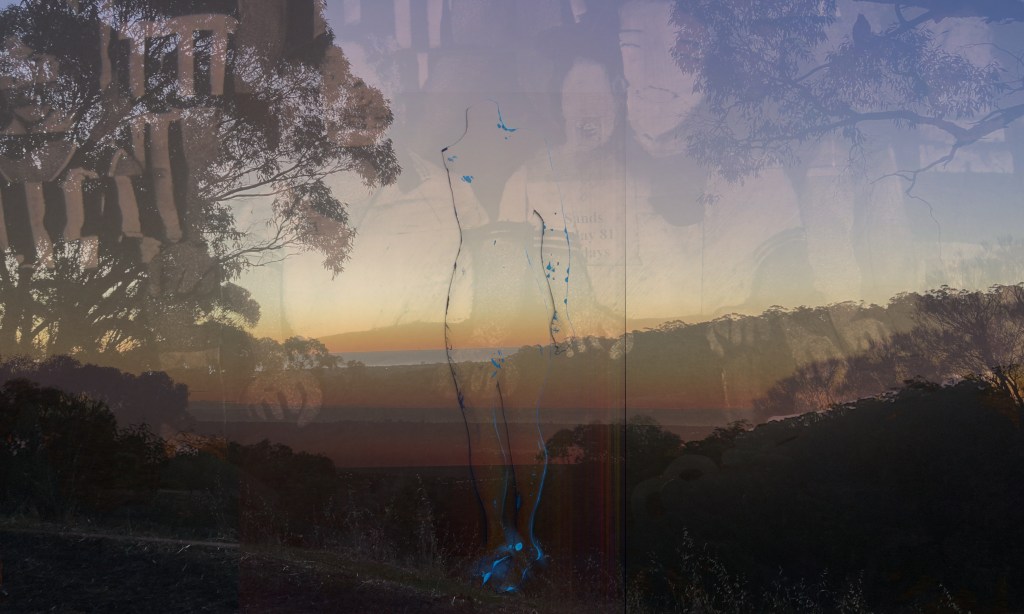

While making this work, I was dwelling on performances of self and the bi-directionality of identity. How roles are formed and mediated through the social order. Whether these roles are multiple performances – like coats that we put on and take off – or performances that become so ingrained that we are unable to separate them from our ‘true’ selves, how we see and feel ourselves and how we are perceived by others is both blurred and entwined.
In the music video of Sorry Not Sorry, Tyler The Creator’s personas appear on a stage, with a Music Hall feel. An audience traipses in before the scene is revealed.

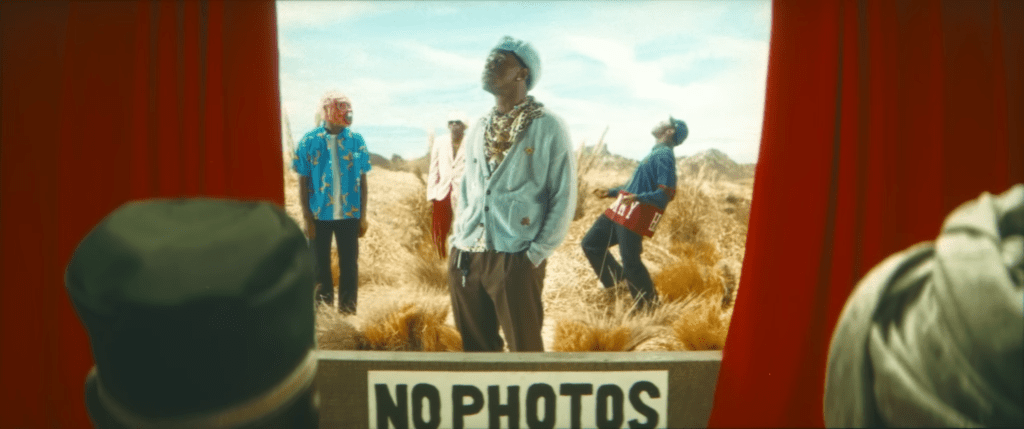

What follows, like anything else, is open to interpretation: this is mine.
Tyler (I’m simplifying his name here rather than pretending that I have any particular knowledge of the artist or his work) seems to be murdering his former performances – this seems undeniable. It is also intentionally funny, almost absurd, as one by one the old Tylers are disappeared in front of our eyes.
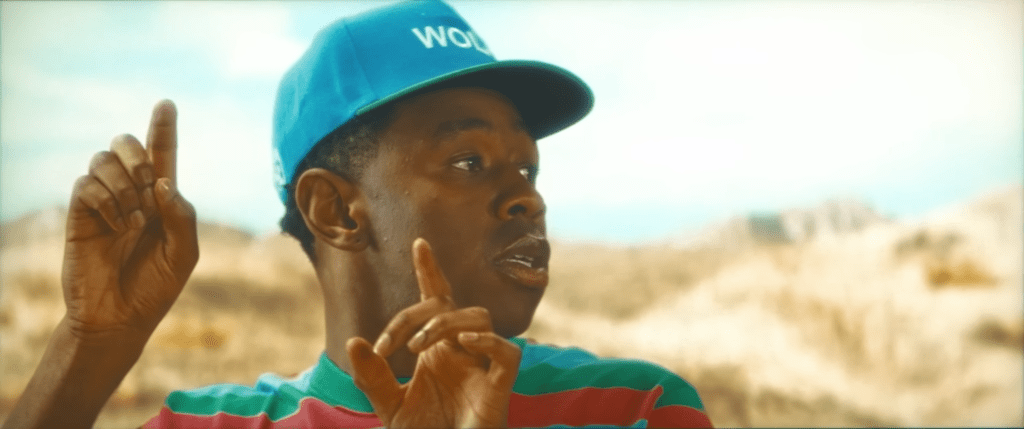

These disappearances are the work of what has been construed by some as ‘new Tyler’.
Though visually-speaking, the ‘new’ Tyler we see is a lot more plain in comparison to his other characters, appearing shirtless and wearing simple black straight trousers. Could Tyler, The Creator be entering his Tyler Okonma era, sticking to a stripped-down, authentic self rather than creating another personality? J Eleuterio, Culted
I think this view underestimates Tyler’s performances. For me they are acts of parody, and in this case I see that he is ridiculing his audience. The shirtless, somewhat expressionless Tyler, murders the other Tylers. In the final performance this so-called new Tyler brutally beats old Tyler. Rather than an act of retribution, redemption or rebirth (as interpretations here and here suggest) this seems to me just another performance of self that is demanded by the audience. This scene presents as a deliberate and intentional parody of the desire for brutalisation of black men (below middle, a still from the horrible 12 Years A Slave (McQueen, S., dir., ’12 Years A Slave’ [Film], 2013.) is for comparison).

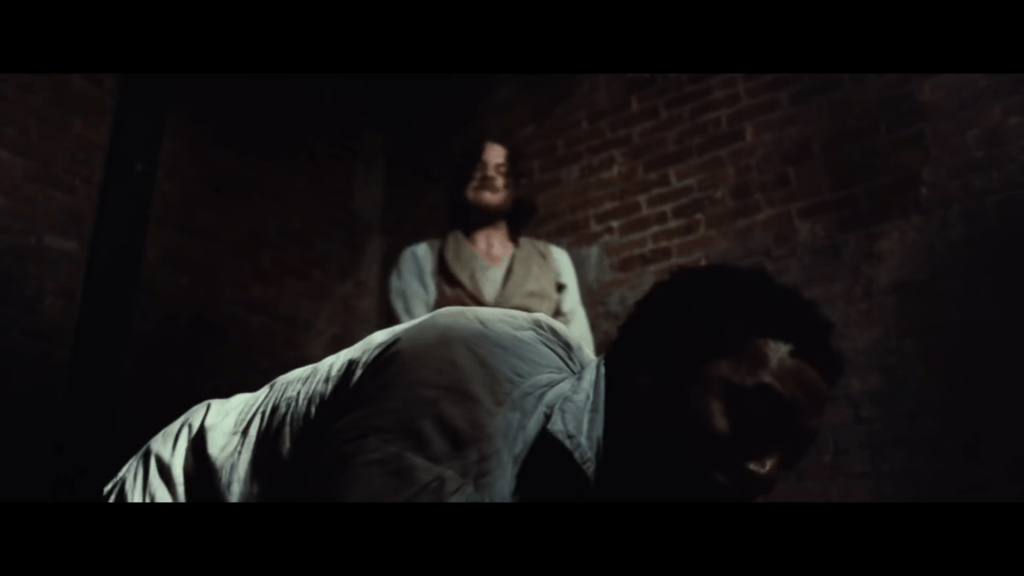
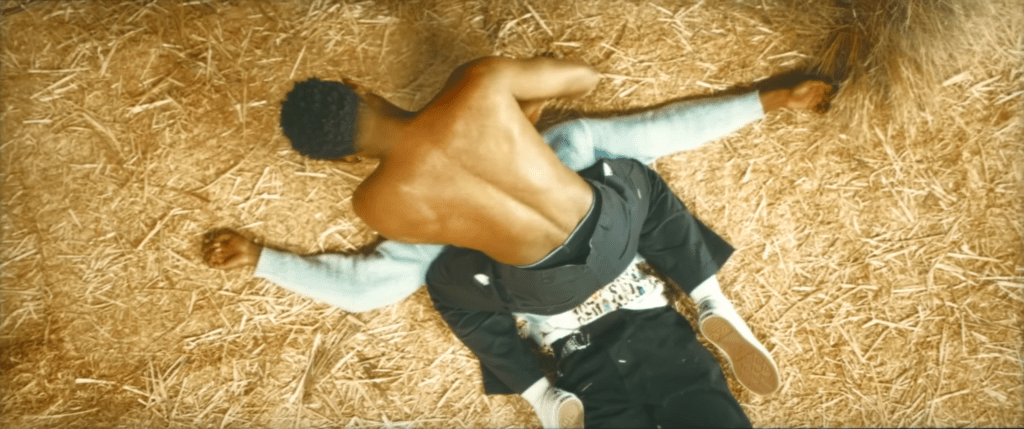
The scene – as observed by the audience on the other side of a red curtain, and the eager and hungry ‘fans’ at home watching through a screen – is evocative of the continuous presentation of black men in the performance of death and dying. That in Tyler’s scenes he is inflicting this on himself, absolves the audience of any need for responsibility or action.
Leave your sacrifice there at the altar. Go and be reconciled to that person. Then come and offer your sacrifice to God. Matthew 5:24 – Anger and Reconciliation
Racist misandry leads to disposability for Black males, reducing them to sacrifices and spectacles within the movements built around their deaths. In this regard, the dissemination of Black male death throughout the technologies of our era (i.e., social media, cable news, smartphones) reinforces the imagery of who should die. R Taylor, Indicted Victims: Black Males and Sexual Vulnerability
Does the audience – listeners, viewers, critics and consumers of culture – want Tyler, and other artists-as-commodities, to self-destruct, absolve himself/themselves of the ‘sins’ of past performances, redeem their true self as placid and unproblematic objects for consumption? Or is it more accurate to state that, as articulated by Taylor above, the audience enjoys the spectacle of (black) death and self-destruction?
‘Authenticity’, your authentic self, the real ‘you’, is a currency of the social media age. I cannot see a way in which we don’t have several authentic selves and that we produce or perform each at the appropriate time. Just because we perform ourselves in a particular way at a particular time, does not mean we are not being authentic.
I also like to see former selves – the paths we’ve crossed before, at different times, in past eras – as ghosts or shadows: still with us, but evoking stories that are half forgotten.


 the quiet room